
Making your first Facebook ads when you've never run one
Go to Instant Image Ads. You paste the link to your sales page, and it builds 20 finished Facebook and Instagram ads, each with its picture and its ad copy written together. The finished ads go into your own ad account switched off, so nothing spends until you say so. It costs $97 once, with enough credits included for about 80 finished ads. A batch takes a few minutes.
What to do right now
- Have the link to whatever you're selling ready. Your sales page, your service page, the thing you want people to buy. That's all it reads.
- Look at the 26 real ads on the sales page and click a few to read the copy behind them. That tells you tonight whether the output fits your business, before you spend a dollar.
- You don't need a Facebook ad account to make the ads. You'll need one, plus a Facebook page, to run them. Both are free, and both take a few minutes to set up.
What this includes, and what it doesn't
For someone who knows their business but has never run a Facebook ad, you get:
- 20 finished ads a batch, across 28 formats, ranked strongest to weakest
- The ad copy, the headline, the description and the button written with every image, so there's nothing to match up afterwards
- A redo on any image or any line of copy you don't like
- Sending into your own Meta ad account with the campaign and ad set fields filled in, every ad landing paused
- Or posting instead of paying: the same ads go out through Buffer to Facebook, Instagram, LinkedIn, X and Pinterest
- 6 and 8 slide storybook carousels from the same $97, in 11 styles
What it does not do:
- It doesn't run or manage your ads, and it never switches an ad on. That stays your hand on the switch.
- It doesn't promise Facebook approval. Facebook decides what runs. It strips the known problem words out of the copy first, and everything arrives paused so you read it before it runs.
- It doesn't invent testimonials. If you don't have any, you don't get testimonial ads, and nothing makes one up. There are plenty of other formats.
- It isn't a subscription. One payment, no ongoing fee.
How it works
Four screens. This is the whole thing, shown with real screenshots.
-
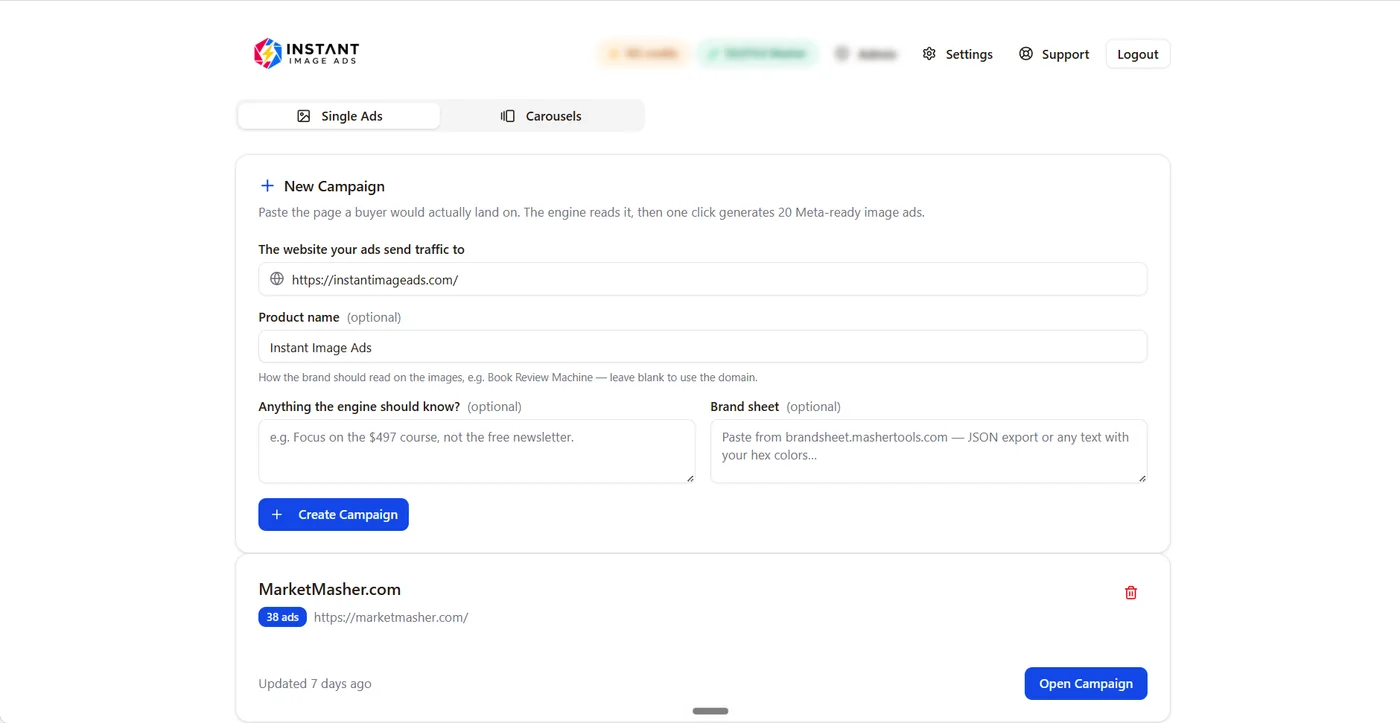
Paste your link. Your sales page, or whatever it is you want
people to buy.
-
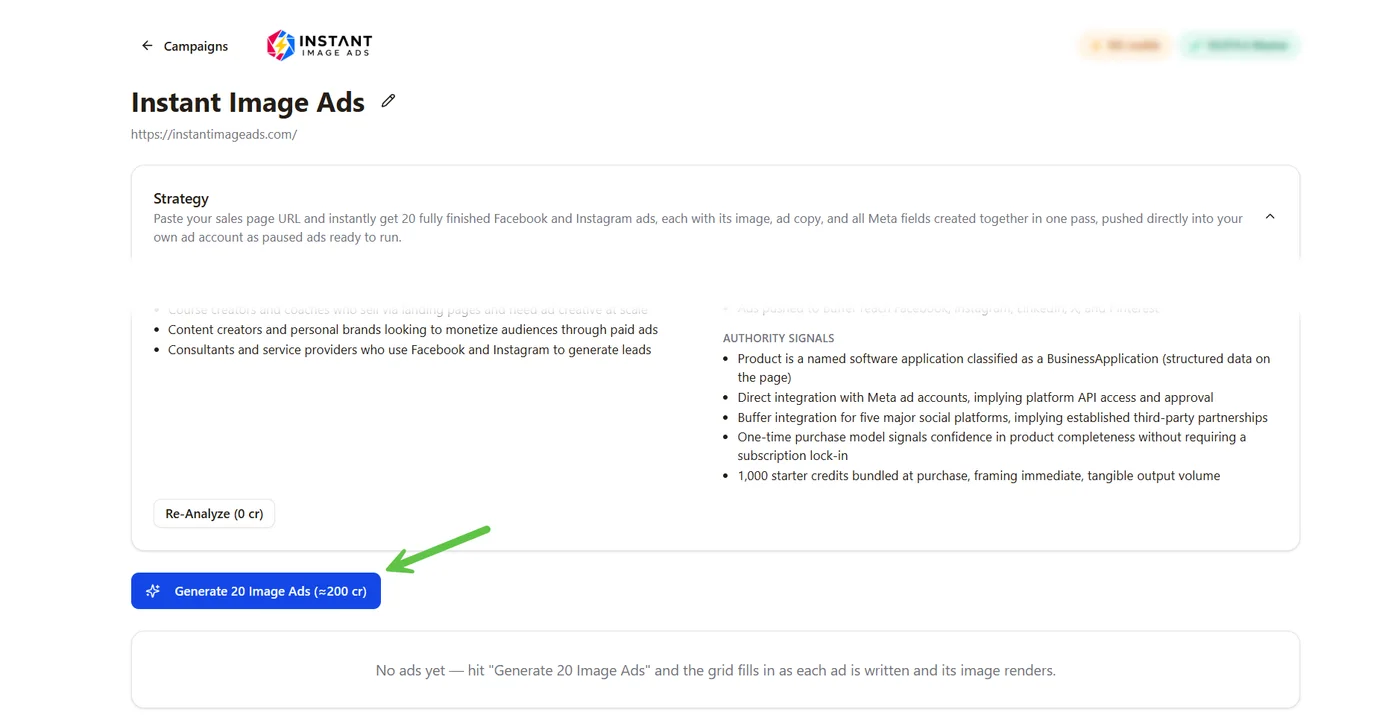
Check what it found. It reads the page and shows you your own
selling points. Fix anything it got wrong. Takes about two minutes.
-
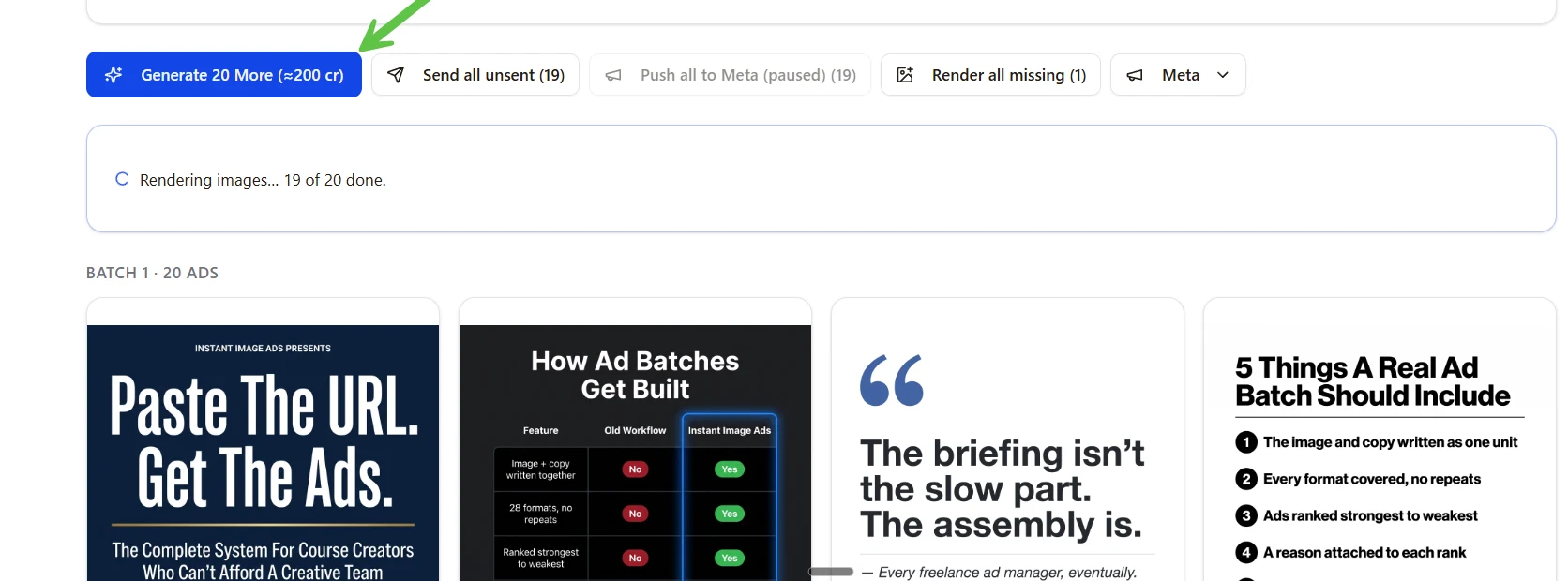
Press the button. 20 finished ads a few minutes later. Or
answer three short questions and get a carousel instead.
-
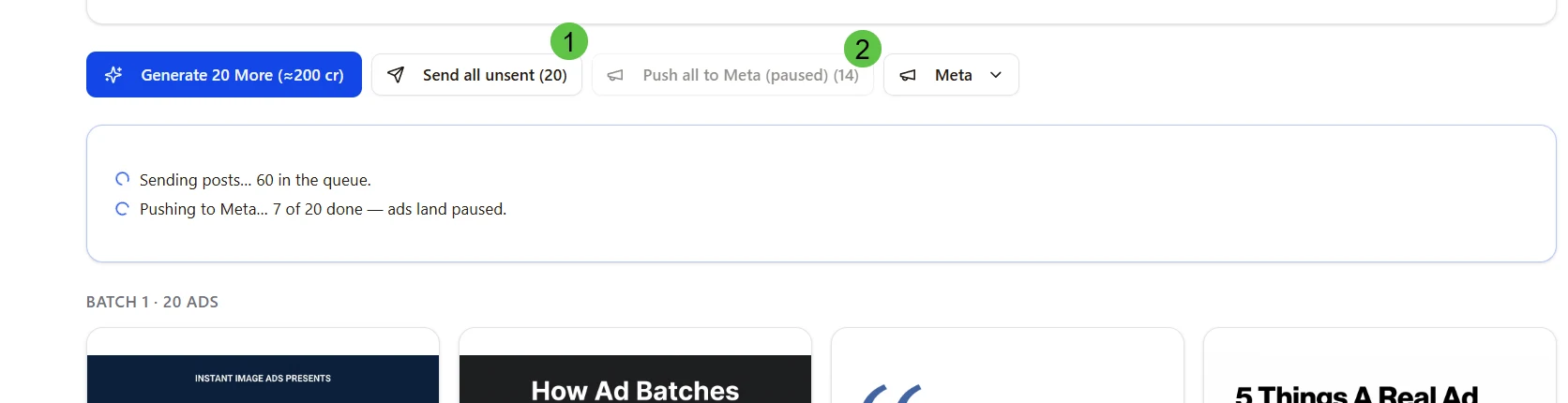
Send them. Into your ad account, or out to your social
accounts.
Proof
- Every image on the sales page came out of the product. 26 real ads sit in the gallery, and clicking one shows the copy written for it.
- The four screenshots above are real screens from a real run.
- The sales page shows a real Ads Manager screenshot: ads pushed from a MasherTools tool into a real ad account, every one switched off, $0.00 spent.
- Costs are printed before anything runs: reading a website is 10 credits once, a finished ad is 10, a carousel slide is 3.
- Seven days, full refund, no explanation required, through the support page.
See the ads it makes. $97, once.
Questions people in your spot actually ask
Do I need a Facebook ad account before I start?
Not to make the ads. You'll need an ad account to send them into Ads Manager, and Facebook wants a page behind every ad that runs. Both are free and take a few minutes to set up.
What does it cost?
$97, once. It's not a subscription. 1,000 credits are included, which is about 80 finished ads plus 7 carousels. Reading a website costs 10 credits one time, a finished ad costs 10, a carousel slide costs 3, and it always tells you what something costs before it runs it. When you run out, you top up with Masher Credits and it keeps going.
Will the ads spend money the moment they reach my account?
No. Every ad arrives in Ads Manager switched off, so nothing spends until you turn it on yourself.
Who writes the ad copy?
The copy is written with each image, from your own sales page, so the picture and the words are made together. Click any ad on the sales page and read the copy that was written for it.
Why 20 ads instead of one good one?
There's more than one audience inside your sales page, and nobody knows in advance which one is worth the most. So it builds 20 different ways of saying it, ranks them strongest to weakest, and you split test. Variety is also what Meta's delivery system rewards.
What if Facebook rejects an ad?
Facebook decides what runs and nobody can promise you otherwise. What this does is strip the known problem words out of the copy before you ever see it, and everything arrives paused so you can read it first.
Why this instead of a freelancer or a generic AI image tool?
Most tools hand you a folder of pictures and wish you luck. A picture isn't an ad. An ad needs a campaign, an ad set, a headline under 40 characters, and copy that matches the image. This writes the copy with each image from your own page, fills in the Meta fields, and puts the finished ads into your own account switched off.
What if it isn't for me?
Seven days, full refund, no explanation required, through the support page.