
Why Running One Ad Almost Guarantees You'll Miss Your Best Buyer
Social media managers who switched to this batch ad approach are delivering 20 finished ads in a single afternoon — and finally have the hours left to launch their own offer
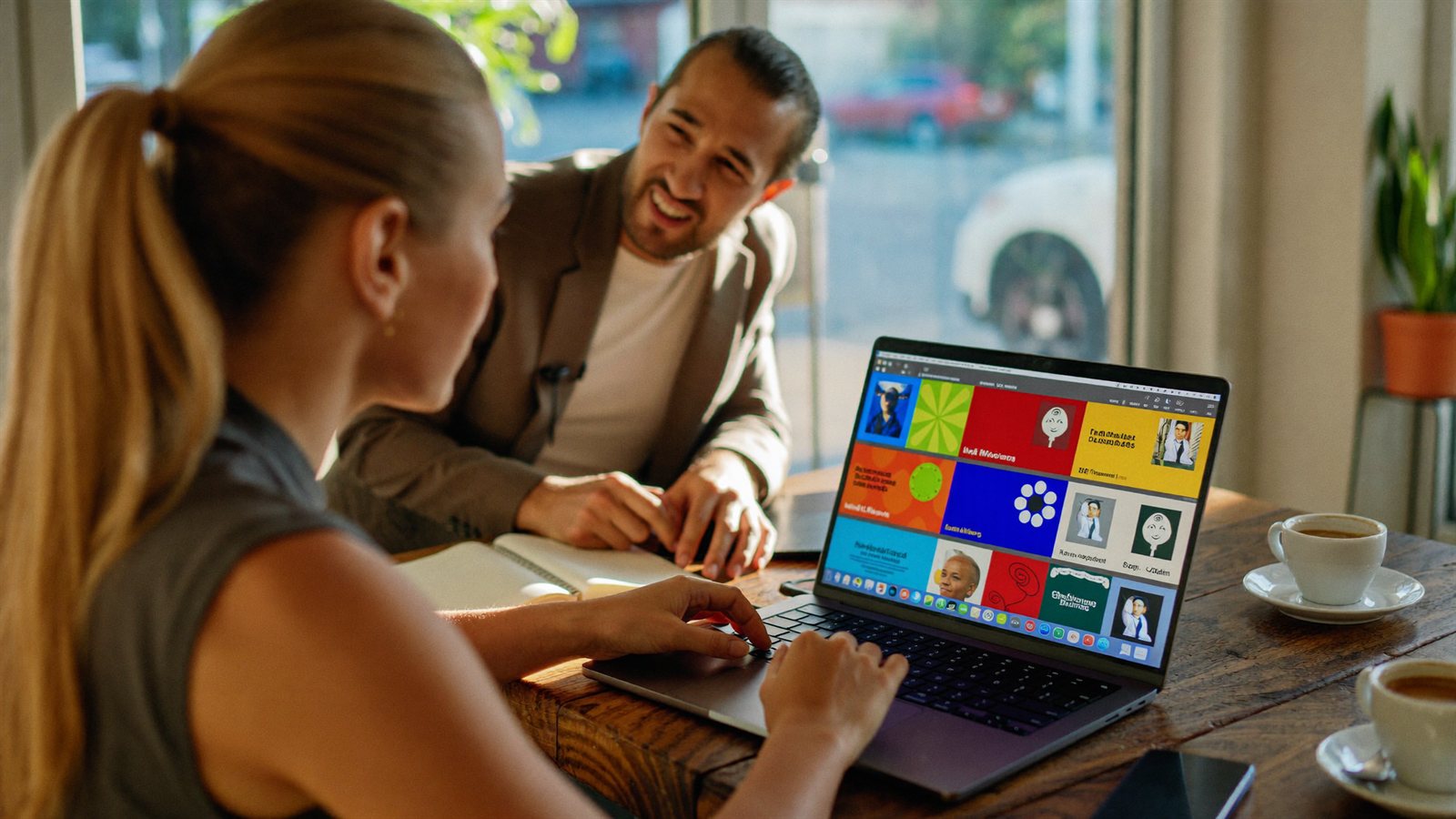
Three months ago, I sat across from a social media manager named Dana at a coffee shop in Austin.
She had been running paid ads for clients for four years.
She was good at it.
Her clients renewed. Her results looked solid on paper. She had a real portfolio of finished work behind her.
But she was spending every Sunday rebuilding ad creative from scratch — Canva open in one tab, ChatGPT in another, a stock photo site in a third — and still finishing the week with a nagging feeling that something wasn't working the way it should.
"I run one ad per client," she told me. "Maybe two if I have time."
I asked her how she decided which one to run.
She paused.
"Gut feeling," she said. "And whatever the client approves."
That answer is more common than most people in this industry will admit out loud.
And it points to something that quietly costs social media managers more reach, more results, and more opportunity than almost any other single thing they're doing — or not doing.
The problem isn't the copy.
It's not the image.
It's not the targeting, and it's not the offer.
The problem is the number.
Most social media managers run one ad — sometimes two — and then wait to see what happens.
That approach made sense five years ago, when building a single polished ad meant a week of back-and-forth between a designer, a copywriter, and a client who changed their mind three times.
Now it's the step most tools skip past without ever naming, because naming it means admitting they've been shipping campaigns you can't actually stand behind.
Meta's algorithm doesn't optimize on one ad.
It tests. It compares. It finds the specific buyer inside your audience who responds to a specific message.
When you hand it one ad, you're not running a campaign with any real chance of reaching the right person.
You're making a single guess and hoping it lands.
And if that guess doesn't connect with the first type of buyer who sees it, the algorithm moves on — and your budget goes with it.
The ad that would have worked for a completely different buyer sitting inside that same audience never runs.
You never find out it existed.
You never know what you missed.
That's the single ad trap, and it's the part most people skip when they talk about what actually moves results versus what looks good in a Monday report.
Dana found out about InstantImageAds.com from a post someone shared in a private Slack group.
She was skeptical.
She told me she almost didn't click.
"Every tool I've tried promises it'll save me hours," she said. "And then it adds three new steps I have to manage myself."
She clicked anyway.
What she found was not what she expected.
InstantImageAds reads your sales page — or your client's sales page — and builds 20 finished ads from it in one batch.
Not drafts.
Not templates you fill in with your own copy afterward.
Twenty finished ads: the image, the Facebook copy, the headline under 40 characters, the description, and the call-to-action button — all created together from the same source page at the same time.
The image and the copy aren't stitched together afterward from two different tools.
They come out of the same process, built from the same page, written from the same words.
The reason this matters is simple. When the picture and the words are built at the same moment from the same source, the buyer sees one message instead of two that almost agree.
Every social media manager who has exported an image from Canva and then tried to write copy that matches it knows the specific frustration of assembling a puzzle where the pieces almost fit.
You adjust the copy to match the image.
You adjust the image to match the copy.
You spend 45 minutes doing work that should have taken ten.
And when you're done, the two still don't quite say the same thing.
The image says one thing.
The copy says something slightly adjacent.
The buyer sees both at once, and the message blurs just enough that nobody clicks.
InstantImageAds removes that step entirely.
The picture and the copy come out together, from the same source, in the same session.
There is nothing to reconcile afterward.
The whole process runs on four screens.
You paste a link.
You check what the tool found on the page.
You press the button.
You send.
Reading the page costs 10 credits and happens once.
Each finished ad costs 10 credits.
Each carousel slide costs 3 credits.
The tool always shows you the cost before it runs anything, so there are no surprises.
The starter package includes 1,000 credits — enough for approximately 80 finished ads and 7 carousels — for a single one-time payment of $97.
No monthly subscription.
No recurring fees.
No slice of your take-home pay bleeding out every month for tools someone else controls.
When starter credits run out, you top up at mashercredits.com, paste an API key into settings once, and the tool continues automatically.
The starter credits always spend first, and nothing expires.
Each batch delivers 20 ads across the strongest formats from a library of 28 available options.
The tool ranks them strongest to weakest so you know exactly where to start testing.
No two ads in the batch look alike.
That matters because split-test variety is the entire point of running a batch instead of a single ad.
When you hand Meta 20 ranked variations instead of one, the algorithm has what it actually needs to find the right buyer automatically — without any extra configuration on your end.
You can also redo any single image or any single line of copy without rebuilding the whole batch.
If one headline doesn't sit right, you change that headline.
If one image misses the mark, you replace that image.
Everything else stays exactly where it is.
When the batch is ready, the ads push directly into your Meta ad account with all fields pre-filled — the campaign, the ad set, the pixel, the headline, the description, the button.
Every ad arrives paused.
Nothing spends a cent until you review it and activate it yourself.
Or you send the finished ads out through Buffer to Facebook, Instagram, LinkedIn, X, and Pinterest.
The tool works for more than one product or client.
It costs 10 credits to read each new site and then runs the same way every time.
One format inside the tool deserves its own mention.
InstantImageAds includes 15 distinct carousel styles, each shown with a real sample slide so you know exactly what you're choosing before it renders.
The styles include Studio Render Red, Oxblood Almanac, Red Ink Case Study, Gilded Parchment Framework, and eleven others.
Each one is built differently.
Each one speaks to a different kind of buyer.
Ash Harris measured carousels against Reels on his own Instagram and got 7 times the views and 42 times the comments.
That number stopped people when he shared it.
It stopped me too.
Because 42 times the comments is not a marginal improvement.
That's a format finding buyers the other format couldn't reach.
The tool also strips known problem words from the copy before you ever see it.
That means when you review the finished ads, the copy is already clean.
No guessing which phrase will get flagged.
No rebuilding an ad after Meta rejects it.
The ad arrives paused, already processed by the tool, ready for your final check before anything goes live.
Dana had been paying for Canva Pro, ChatGPT, and a stock photo subscription every single month.
All three, recurring, every month.
And she was still spending her Sundays pulling pieces together from three different places, trying to get them to match.
InstantImageAds replaces all three.
One $97 payment covers the entire ad creation workflow.
The image, the copy, the headline, the description, and the button — all together, all from one link, all in one session.
You also don't need testimonials for the tool to work.
If your page doesn't have them, the tool skips testimonial formats and uses the other formats from the 28 available instead.
You don't need to have set up a Meta campaign before.
The tool fills in the campaign, the ad set, the pixel, the headline, and all required fields for you.
You don't need to spend an afternoon learning a new interface before you can use it.
The entire process is four screens: paste a link, check what it found, press the button, and send.
Three months after that coffee shop conversation, Dana sent me a message.
She had delivered a full set of 20 finished ads to a new client in the same afternoon she started.
She charged more for that deliverable than she had charged for a full week of work on any previous client.
And she still had time left that evening to start building the ad set for her own digital offer.
Not her client's offer.
Hers.
"I've been saying I'd launch my own thing for two years," she wrote.
"I kept putting it off because client work fills the week and there's nothing left by Friday."
Now there was something left.
Not because the clients got easier.
Because the tool gave her back the hours she had been spending on work that should have taken one afternoon instead of five.
She had a real portfolio of finished ad sets to show new prospects.
She had a process she could repeat without rebuilding from zero every time.
She had time on her own calendar to run ads for something she owned.
That's the actual shift.
Not the 20 ads.
Not the one-time payment.
Not the four-screen process.
The shift is what happens when a social media manager who has been building campaigns for other people's offers finally has the hours and the system to build something of their own — on their own schedule, with nobody else deciding when she works or what it's worth.
InstantImageAds is available at InstantImageAds.com.
The starter package includes 1,000 credits — approximately 80 finished ads plus 7 carousels — for a one-time payment of $97.
No monthly fees.
No subscriptions.
No recurring charges.
You paste the link.
You check what it found.
You press the button.
You send.
That's the whole thing.